Cyber-Security-ReportV2
Last updated by: Kartik Sangwan, Last updated on: 27/09/2025
# Redback Operations — Smart Bike Cybersecurity Audit Report
Project: Smart Bike (IoT) Organisation: Redback Operations Author: Kazys Skudutis Version: v1.0 Date: 3 September 2025
Executive Summary
This audit evaluates the security posture of the Redback Smart Bike platform with a primary focus on the embedded Raspberry Pi, wireless interfaces (BLE/Wi-Fi), network exposure, operational security, and data privacy. Tests were performed over several hours to capture realistic behaviour and restrict possible outlying occurrences.
Headline observations
- Remote SSH access was denied during testing, which reduces remote attack surface.
- Physical access to the Raspberry Pi was possible and provided immediate shell access, implying inadequate tamper resistance and the ability to set a new password locally.
- Network scans indicated open services: SSH (22), DNS (53), VNC (5900); VNC in particular expands the attack surface and should be disabled or tightly constrained.
- BLE advertising/connections were observed (KICKR/Wahoo). Security mode, pairing method, and data sensitivity require validation.
- MQTT traffic requires confirmation of broker address, auth method, and TLS; plaintext MQTT would be a critical finding.
- Outdated libraries were reported on the Raspberry Pi, indicating vulnerability exposure pending patching.
- Data privacy artifacts (e.g., consent/waiver) and live data capture evidence were not fully provided and are flagged as TBD.
Risk posture (initial, by domain)
- Device & Physical: High (due to easy console access); mitigation feasible with enclosure/tamper controls and secure boot/hardening.
- Network Exposure: Medium-High (VNC/DNS/SSH exposure); reduce via least-service, firewall, and segmentation.
- Wireless (BLE/MQTT): Medium pending confirmation of TLS/mTLS and BLE pairing security.
- Ops & Patch Management: Medium-High due to outdated packages.
- Data Privacy/Governance: TBD pending waivers, retention, and DPIA artifacts.
Top recommendations (prioritised)
- Eliminate or lock down VNC (5900); restrict SSH to keys only; apply firewall allow-lists/VLAN segmentation.
- Enforce MQTT over TLS (8883) with per-device credentials or mutual TLS; prohibit plaintext credentials.
- Harden Raspberry Pi: disable local auto-login, enforce strong creds/keys, enable disk encryption where practical, apply updates.
- Implement tamper resistance (sealed enclosure, anti-tamper seals, internal switch/alert on case open).
- Rework and update the security framework (previously written by Kazys, updates required)
1. Introduction
This report consolidates the results of hands-on testing and observation of the Smart Bike platform and supporting infrastructure. The objective is to provide actionable, prioritised guidance to reduce risk while enabling continued development and testing.
1.1 Scope
- Hardware: Raspberry Pi (onsite device)
- Network: Wi-Fi, MQTT, BLE
- Operations: Update/patch posture, credential hygiene, basic logging/monitoring
- Privacy: Data capture, consent, and retention considerations
1.2 Out-of-Scope
- Cloud/Backend components not directly exercised during tests
- Third-party mobile apps beyond interface observation
- Formal cryptographic validation of BLE pairing/bonding (requires additional instrumentation)
2. Photo Gallery — Smart Bike, Setup & Raspberry Pi Module
2.1 Smart Bike — Exterior & Components
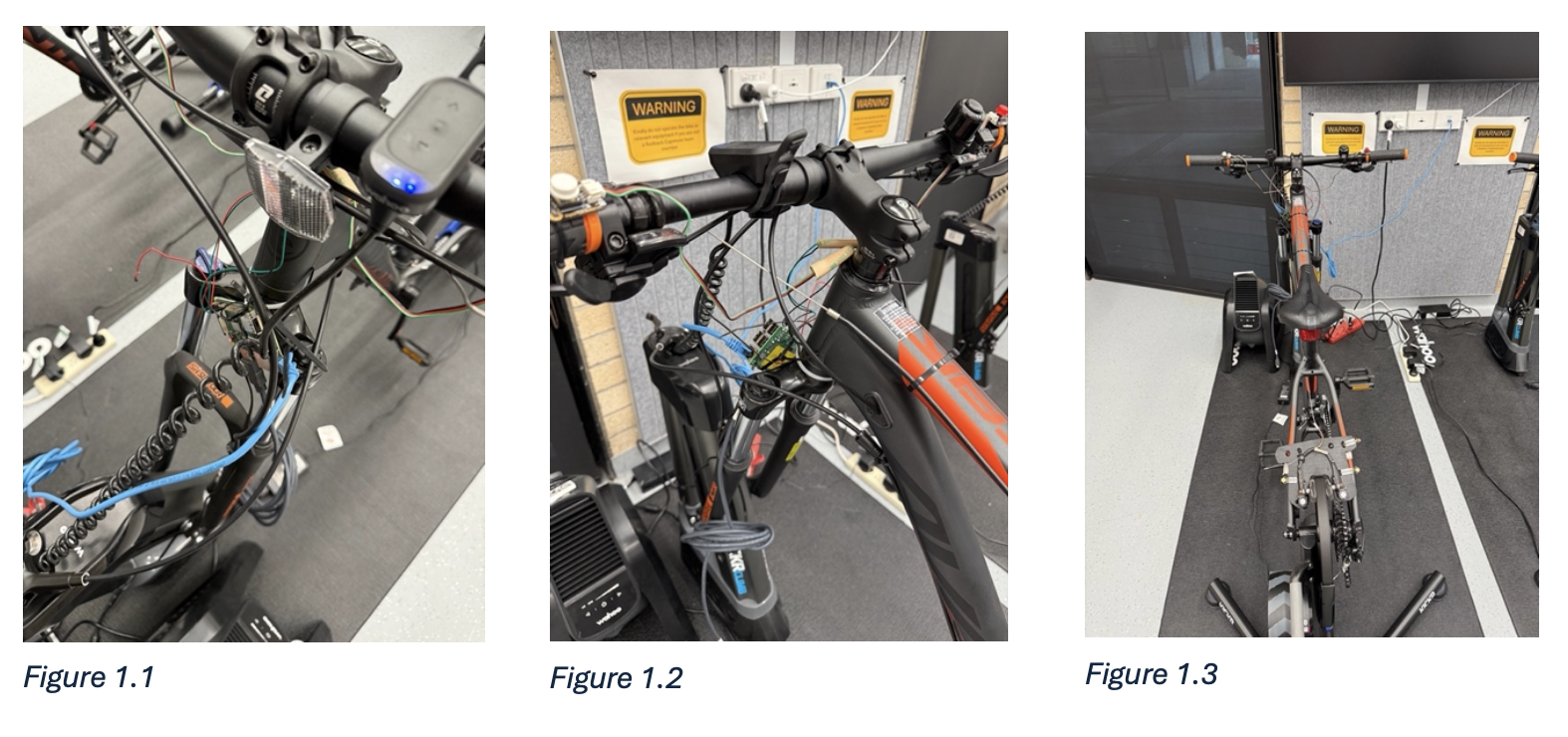
Figure 1.1, 1.2, 1.3: Smart bike close-up/Raspberry Pi View/Afar. 26 August, Makerspace. Notes: Physical access to Pi. Exposed SD card, accessible USB/HDMI, unsealed casing.
2.2 Test/Lab Setup
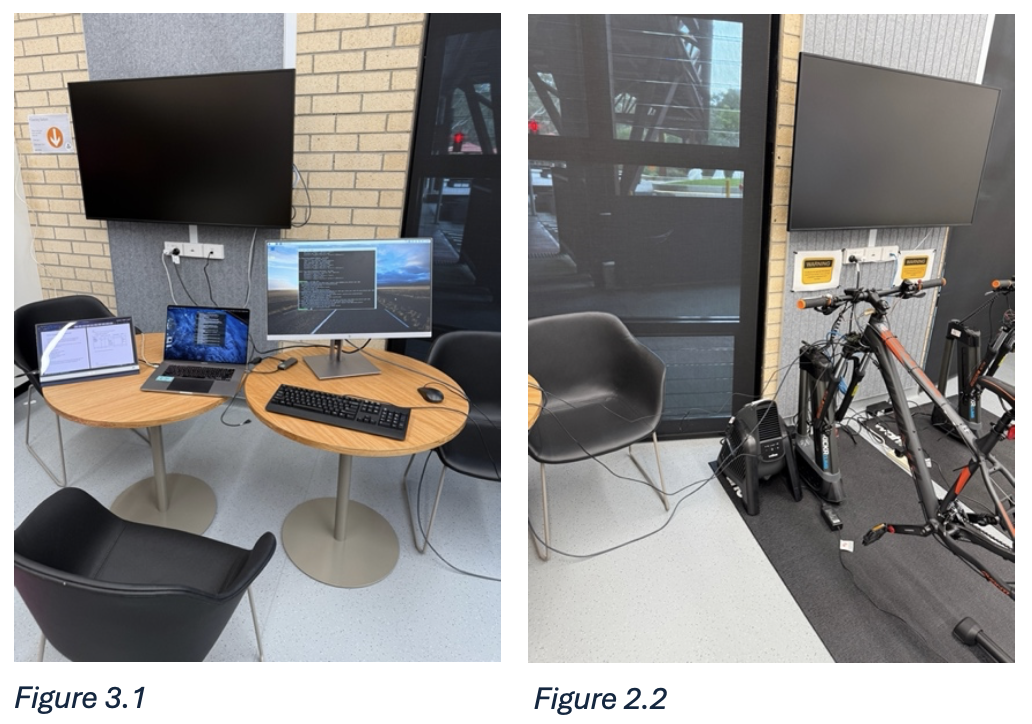
Figure 2.1, 2.2: Test laptop, Monitors, Direct Connection, Power. 26 August, Makerspace.
3. System Overview (As Observed)
- Embedded Controller: Raspberry Pi (model 4).
- Network Addressing: Observed IP 10.150.43.124.
- Wireless: BLE advertising; MQTT broker [TBD broker/port]; Wi-Fi Connection.
- Services: SSH(22), DNS(53), VNC(5900) discovered during scan.
4. Methodology
- Observation, network discovery, and protocol analysis.
- Tooling: Wireshark (traffic analysis), nmap (port/service enumeration), basic OS commands.
- Evidence captured as screenshots/photos.
5. Findings & Evidence (by Test)
Test 1 — Raspberry Pi Access (Physical & Remote)
Objective: Assess exposure via remote login and on-device console.
Observed
- Remote access (SSH): Denied during test window.
- Physical access: Permitted; console access achieved without credentials; local password change was immediately possible.
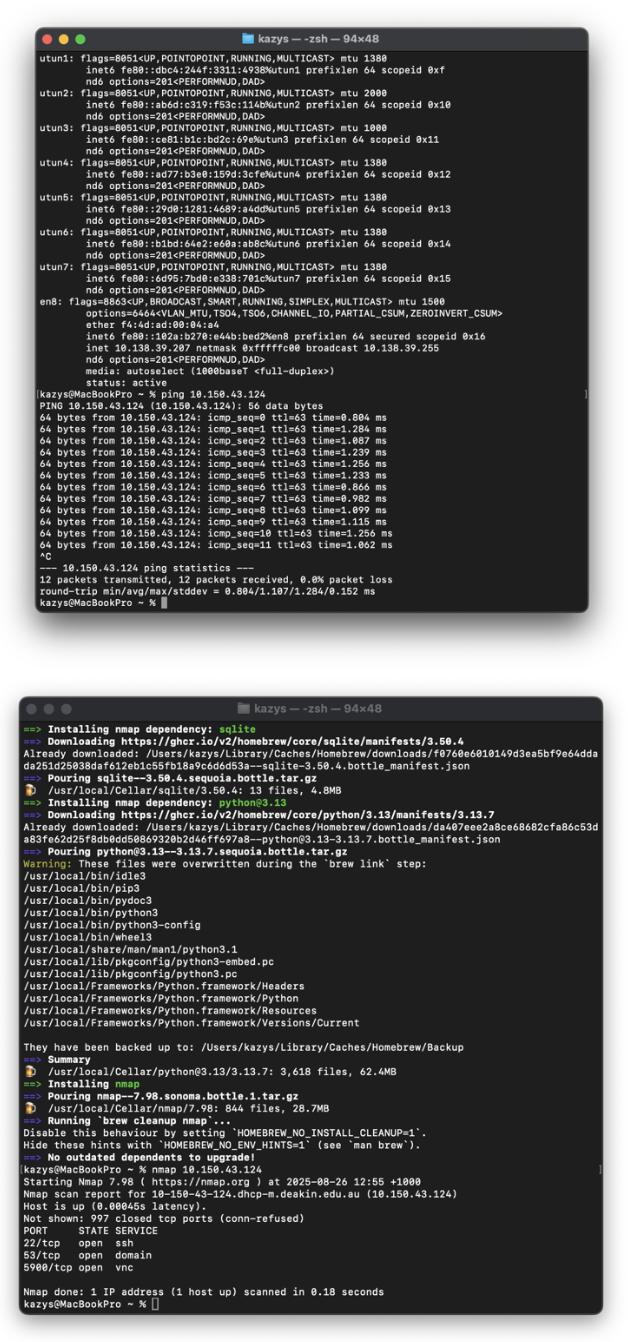
- Connectivity: Stable; ping successful to 10.150.43.124.
- Notes: Screenshots captured during testing.
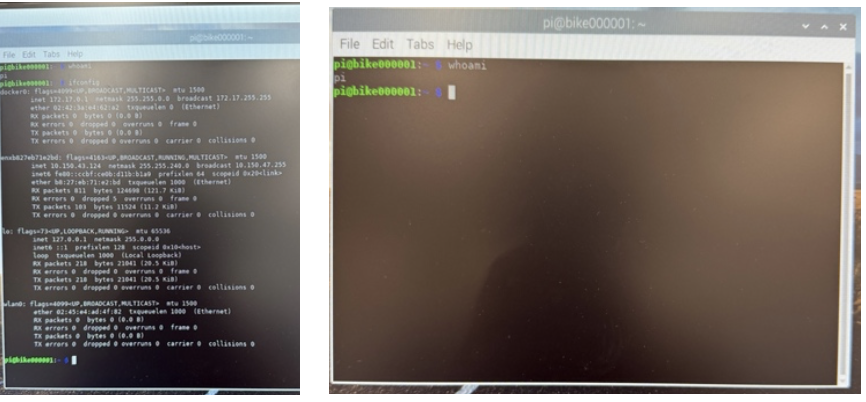
Risk
- High: Physical compromise enables privilege escalation, credential resets, offline data extraction (via SD card), and persistence implants.
Recommendations
- Enclosure & Tamper Controls: Lockable casing, tamper-evident seals, conceal SD card; internal microswitch to log/alert on case open.
- Local Hardening: Disable auto-login; require creds for local terminal; consider full-disk encryption or at minimum encrypt secrets; minimize shell tools on prod image.
- Identity & Keys: Unique host keys per device; enforce SSH key-only auth; disable password auth; implement rate-limiting (Fail2ban/MaxAuthTries).
- Monitoring: Local audit logs (journald), remote log shipping, tamper alerts.
Test 2 — Wireless Communications (BLE & MQTT)
Objective: Validate discoverability, pairing, and transport protection.
Observed
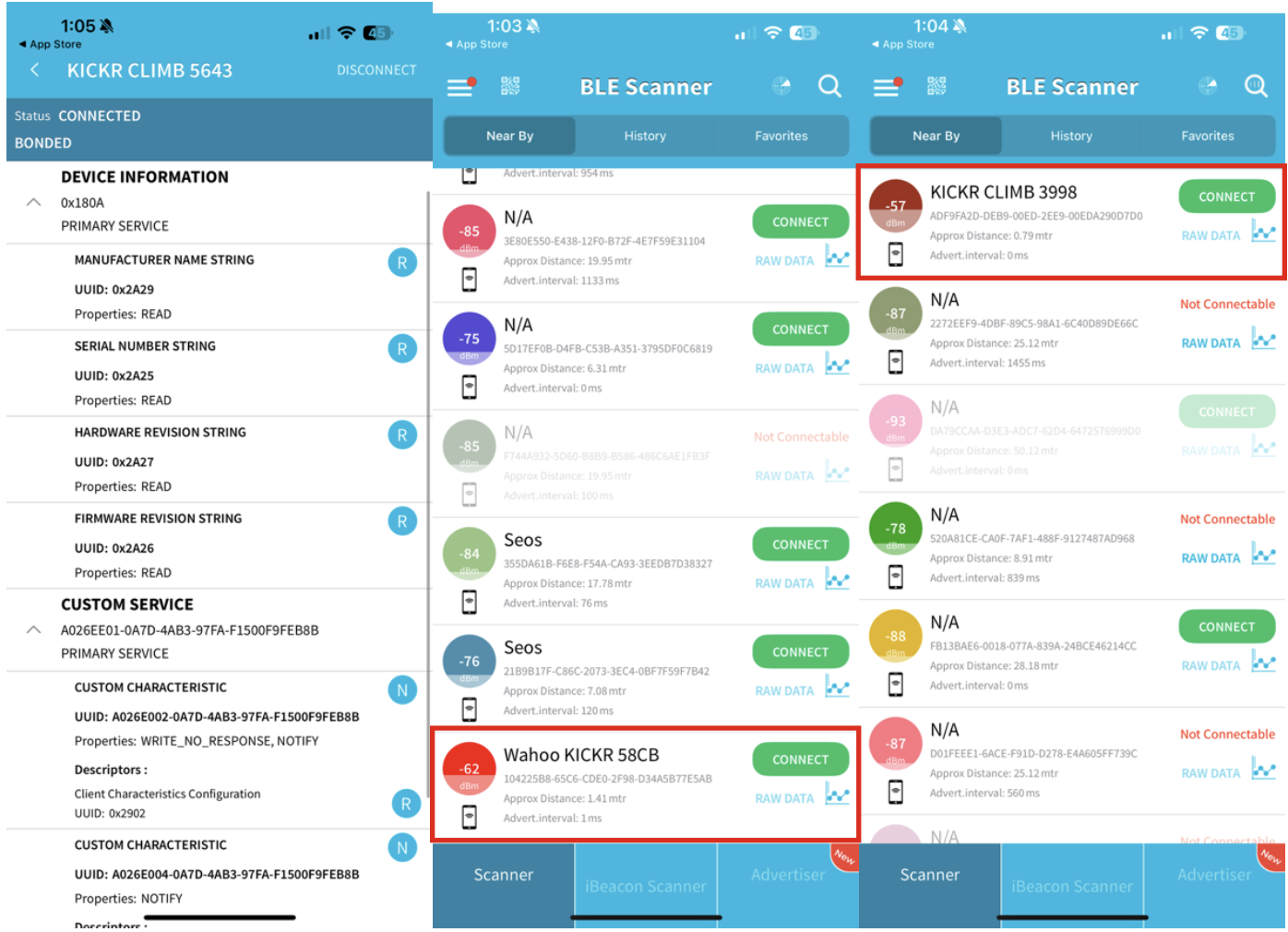
- BLE: Device discoverable; connections observed with KICKR/Wahoo.
- MQTT: Traffic analysis captured during testing sessions.
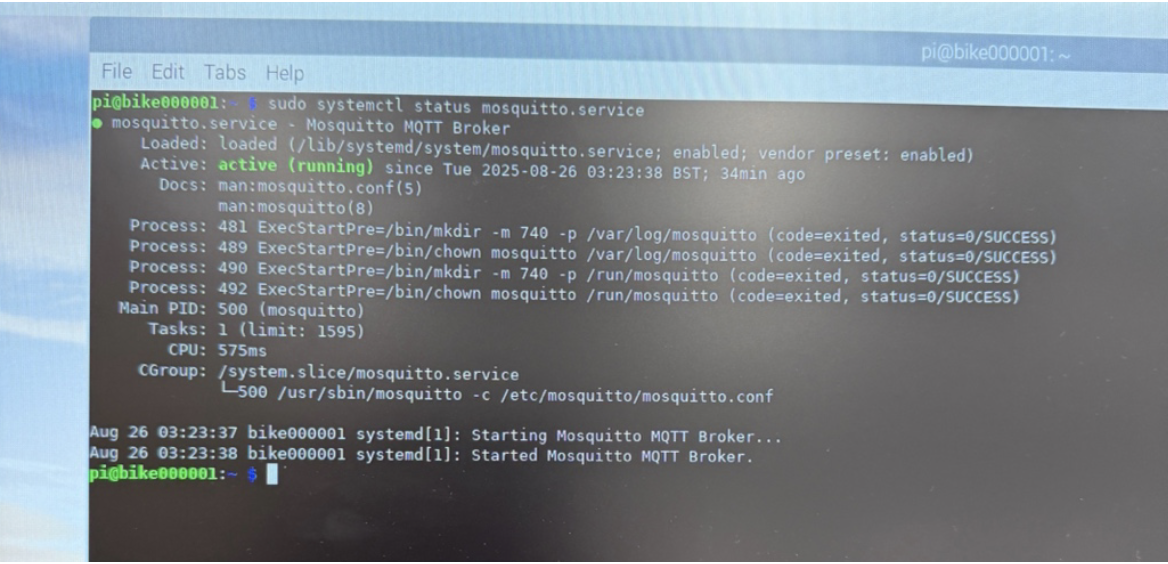
Risk
- Medium–High if BLE uses insecure pairing ("Just Works") or if MQTT is plaintext (creds/topic data interception, injection, replay).
Recommendations
- BLE: Enforce LE Secure Connections with passkey/OOB; restrict services/characteristics; rotate keys; disable unused profiles.
- MQTT: Mandate TLS (8883); device-unique credentials or mutual TLS; least privilege per topic (ACLs); QoS per use-case; set retain wisely; disable anonymous access.
- Broker Hygiene: Hide broker from public; IP allow-list/VPN; audit topics; enable authz logs and client ID governance.
Test 3 — Network Configuration & Exposure
Objective: Enumerate open ports and assess segmentation posture.
Observed
- nmap indicated open ports 22/53/5900 on the device.
- Ping to peers successful.
- Services on 53 (DNS) and 5900 (VNC) require justification.
Risk
- Medium–High: VNC is a common remote desktop vector; DNS service could enable amplification/misuse if misconfigured; SSH brute-force risk without key-only.
Recommendations
- Least Service: Disable VNC unless essential; if needed, bind to localhost + SSH tunnel only.
- Firewalling: Apply ufw/nftables default-deny; allow only needed egress; restrict ingress to management VLAN.
- Segmentation: Place devices on dedicated IoT VLAN; isolate from corporate/admin networks; apply L2 protections (ARP inspection).
- SSH Hardening: Keys-only, no password, change default user, banner warning, idle timeouts.
Test 4 — Data Privacy Validation
Objective: Confirm presence of user consent and data mapping.
Fore notes: This test has not been actioned and will need to be checked before this report can be finalised. Kazys to meet with a team member and discuss.
Observed
- Waiver/Consent: [TBD – Provide copy or reference].
- Live Data Capture: [TBD] Wireshark captures to confirm whether PII/telemetry traverse in plaintext; need sample MQTT topics.
- Data Use/Retention: [TBD] policy link or summary.
Risk
- TBD pending confirmation of storage location, retention, and user rights process.
Recommendations
- Data Inventory: Create/maintain a data map.
- Consent & Notices: Provide user-friendly notices; capture consent where required; document lawful basis.
- Retention & Minimization: Default short retention; anonymise or aggregate wherever possible.
Test 5 — Operational Security (Patching & Vulnerabilities)
Objective: Determine update posture and vulnerability exposure.
Observed
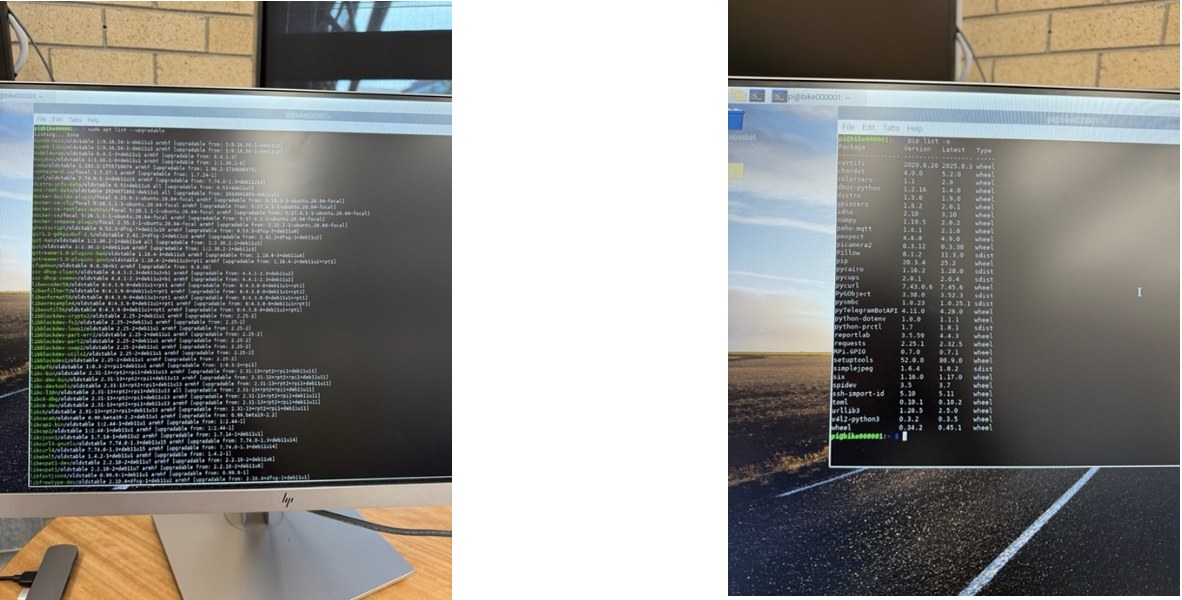
- Outdated libraries: Yes — analysis indicates multiple packages requiring updates.
- Team Response: [TBD] posture on incident handling and breach hypotheticals.
Risk
- Medium–High: Known CVEs may be exploitable; outdated dependencies undermine trust in telemetry/control software.
Recommendations
- Patch Cadence: Monthly baseline updates; emergency out-of-band for critical CVEs.
- Secure Build: Reproducible images; sign OS/application artifacts; verify signatures on boot/update.
- Backups & Rollback: Test backups; support safe rollback of device images.
6. Risk Register (Initial)
Update team leads during remediation.
| ID | Risk | Likelihood | Impact | Severity | Owner | Mitigation | Target Date |
|---|---|---|---|---|---|---|---|
| R-01 | Physical console access to Pi enables credential reset & data exfiltration | High | High | High | [TBD] | Enclosure + tamper controls; encrypt secrets; disable auto-login | [TBD] |
| R-02 | VNC (5900) exposed | Medium | High | High | [TBD] | Disable VNC or restrict to localhost/SSH tunnel; MFA | [TBD] |
| R-03 | MQTT without TLS/mTLS | Medium | High | High | [TBD] | TLS 1.2+; mTLS; topic ACLs; no anonymous | [TBD] |
| R-04 | BLE insecure pairing/data leakage | Medium | Medium | Medium | [TBD] | LE Secure Connections; restrict services; rotate keys | [TBD] |
| R-05 | Missing consent/retention artifacts | Medium | High | High | [TBD] | Publish privacy notice; consent capture; data map | [TBD] |
7. Standards & Best-Practice Alignment (Guidance)
- OWASP IoT Top 10: device hardening, secure update, secure comms, privacy.
- CIS Benchmarks (Debian/Raspberry Pi OS): SSH, firewall, logging, services.
- ASD Essential Eight (where applicable): patching, application hardening, MFA.
- ISO/IEC 27001/27701: policy/controls and privacy management mapping.
8. Open Items (TBD)
- Provide copy of user waiver/consent and data retention policy.
- Confirm BLE pairing mode/security level and data sensitivity.